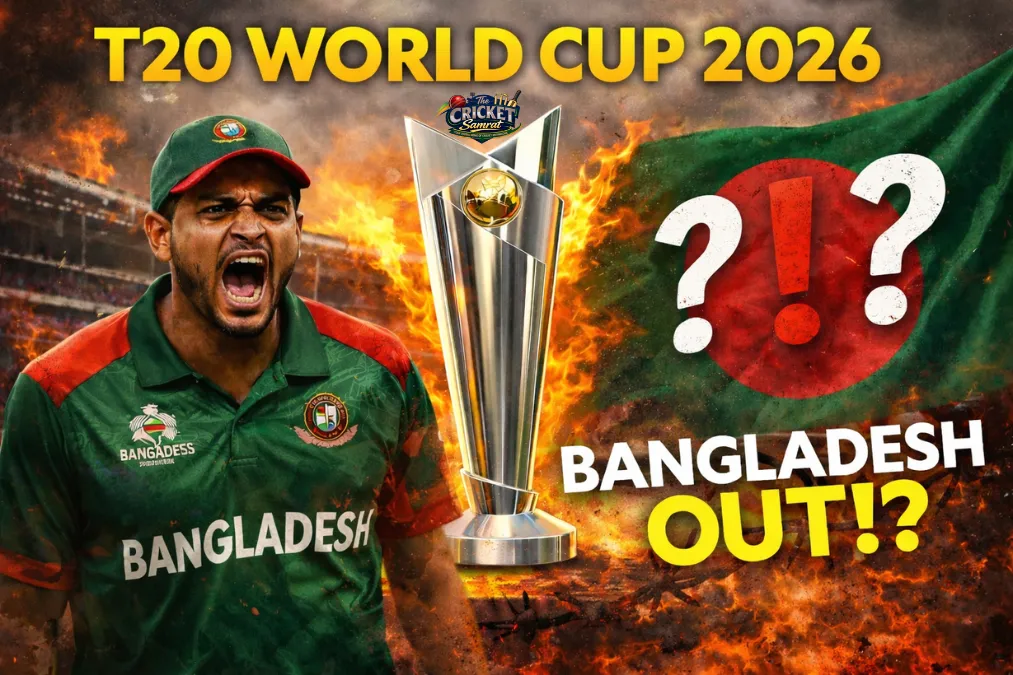
Introduction: A Controversy That Shook World Cricket
The participation of Bangladesh in T20 World Cup 2026 has become one of the most sensitive and controversial issues in modern international cricket. What was expected to be a celebration of the sport has instead turned into a geopolitical and security debate involving the Bangladesh Cricket Board (BCB), the International Cricket Council (ICC), and the Board of Control for Cricket in India (BCCI).
Bangladesh’s refusal to play its matches in India, citing concerns over player and staff safety, has triggered an unprecedented chain of events—ranging from emergency ICC meetings and voting controversies to fears of Bangladesh becoming isolated within the global cricketing ecosystem.
With Scotland likely to replace Bangladesh if the team withdraws, the situation has now escalated into a full-blown governance crisis that could redefine how international tournaments are hosted and contested in the future.
Bangladesh Declines to Play T20 World Cup Matches in India
Following an internal meeting involving national team players, coaching staff, and senior officials, Bangladesh formally conveyed its unwillingness to play matches in India during the T20 World Cup 2026.
Bangladesh’s Sports Advisor Asif Nazrul, addressing the media, made it clear that while the team wants to compete in the tournament, serious concerns remain unresolved.
“Everyone wants to play the World Cup. But the safety of our players and support staff is a major concern. Until these concerns are properly addressed, it is difficult to move forward,” he stated.
The statement reflected not defiance but apprehension—an important distinction that Bangladesh continues to emphasize in its communication with the ICC.
ICC Issues a One-Day Ultimatum to Bangladesh
On January 21, the ICC took a firm stance by issuing a 24-hour deadline to the Bangladesh Cricket Board to confirm whether it would participate in the tournament under the existing schedule.
During the ICC Board meeting:
- Bangladesh’s request to change match venues from India to Sri Lanka was rejected
- A proposal to move Bangladesh to another group was also dismissed
- The ICC maintained that no extraordinary security threat existed for the Bangladesh team in India
The ultimatum left Bangladesh with limited options: accept the schedule, or risk withdrawal and the severe consequences that follow.
Bangladesh Cricket Board Responds: “Dialogue Will Continue”
Despite the ICC’s firm response, BCB President Aminul Islam Bulbul stressed that Bangladesh would not abandon dialogue.
Speaking to ANI, Bulbul said:
“Some decisions taken in the ICC Board meeting were surprising. However, Bangladesh will continue discussions with the ICC. We are not shutting the door. We only want our concerns to be taken seriously.”
This measured tone underlined Bangladesh’s strategy—resistance without rebellion, caution without confrontation.
Why Bangladesh Requested a Venue Change
The Bangladesh Cricket Board requested that its matches be shifted from India to Sri Lanka, citing:
- Concerns about player safety
- Increased political and social tensions
- Reduced travel fatigue
- A more controlled security environment
Bangladesh proposed that it be moved from Group C to Group B, which would allow all its matches to be played in Sri Lanka.
However, the ICC rejected this request outright.
Group Allocation: What Bangladesh Wanted vs What ICC Approved
| Aspect | Bangladesh Proposal | ICC Decision |
|---|---|---|
| Group Placement | Move from Group C to Group B | Rejected |
| Match Venues | All matches in Sri Lanka | Matches in India only |
| Travel Concerns | Reduced travel | Existing schedule upheld |
| Security Review | Independent reassessment | ICC says no special threat |
Bangladesh’s Official Group and Match Schedule
Under the current confirmed schedule, Bangladesh in T20 World Cup 2026 is placed in Group C.
Bangladesh Group C Matches
| Match | Opponent | Venue |
|---|---|---|
| Match 1 | West Indies | Eden Gardens, Kolkata |
| Match 2 | Italy | Eden Gardens, Kolkata |
| Match 3 | England | Eden Gardens, Kolkata |
| Match 4 | Nepal | Mumbai |
The tournament begins on February 7, with matches hosted jointly by India and Sri Lanka.
Scotland Set to Benefit If Bangladesh Withdraws
Should Bangladesh officially withdraw, Scotland is widely expected to take its place.
According to media reports:
- Scotland would qualify based on ICC rankings
- A similar precedent was set in 2009, when Zimbabwe withdrew from a major ICC event
Cricket analysts believe Scotland’s inclusion would be almost automatic if Bangladesh exits.
Financial Losses Bangladesh Would Suffer by Withdrawing
Withdrawal from the tournament would have severe financial consequences for Bangladesh.
Estimated Financial Impact
| Category | Loss |
|---|---|
| ICC Participation Fee | Approx. USD 500,000 |
| Match Fees | Lost |
| Performance Bonuses | Lost |
| Player Endorsements | Affected |
| Broadcasting Revenue | Reduced |
This does not include indirect losses related to sponsorship trust and future hosting opportunities.
Impact on ICC Rankings and Player Careers
If Bangladesh does not participate:
- The team’s T20 ranking points will stagnate
- Competing teams will gain ranking points
- Individual Bangladeshi players will drop in global rankings
- Reduced visibility may affect franchise league opportunities
For younger players especially, missing a World Cup could permanently alter career trajectories.
Diplomatic Fallout: India–Bangladesh Cricket Relations at Risk
Cricket relations between India and Bangladesh could suffer long-term damage.
Analysts warn:
- India may refuse bilateral series with Bangladesh
- Similar to India’s stance against Pakistan in bilateral cricket
- Bangladesh tours to India could be canceled
- Reciprocal decisions may follow
Given India’s influence in world cricket, this could isolate Bangladesh further.
IPL Participation: Another Potential Casualty
If relations deteriorate further:
- Bangladeshi players could be barred from the IPL
- Similar to Pakistan players, who have been excluded for years
- This would significantly affect player income and exposure
The controversy involving Mustafizur Rahman has already intensified these fears.
Mustafizur Rahman IPL Controversy Explained
Timeline of Events
| Date | Event |
|---|---|
| Dec 16 | KKR buys Mustafizur Rahman for ₹9.2 crore |
| Late Dec | Protests erupt in India |
| Jan 3 | KKR releases Mustafizur |
| Afterward | Bangladesh bans IPL broadcasts |
The protests were linked to violence against Hindus in Bangladesh, with reports of seven deaths triggering outrage in India.
Following pressure, the BCCI denied Mustafizur permission to play in the IPL.
Bangladesh’s Reaction: IPL Broadcast Ban
In response:
- Bangladesh banned IPL broadcasts domestically
- The government cited “public sentiment”
- The move escalated tensions between boards
Soon after, Bangladesh formally requested venue changes for the T20 World Cup, citing security concerns.
ICC Voting Controversy: A Stark Reality Check
During the ICC Board vote on venue change:
- Bangladesh received 2 votes
- India received 14 votes
This overwhelming margin highlighted:
- India’s dominance in global cricket governance
- Bangladesh’s limited influence within ICC decision-making
The vote became symbolic of the power imbalance in modern cricket administration.
Pakistan’s Support—But No Boycott
Pakistan supported Bangladesh’s position during discussions but stopped short of boycotting the tournament.
While some reports suggested Pakistan might reconsider participation, no formal withdrawal threat was made.
This left Bangladesh largely isolated in its stance.
Tamim Iqbal’s Warning: “Think of the Future”
Former Bangladesh captain Tamim Iqbal urged restraint and wisdom.
“Decisions regarding the World Cup must be taken carefully. The consequences will affect not just today’s players, but future generations of Bangladeshi cricketers.”
His statement resonated widely across the cricketing world.
Could Bangladesh Become Isolated in World Cricket?
Experts warn that withdrawal could result in:
- Reduced invitations to global tournaments
- Limited influence in ICC decisions
- Marginalization in scheduling and hosting rights
With the BCCI’s enormous influence, Bangladesh’s position remains precarious.
What Happens Next?
Bangladesh faces three possible outcomes:
- Accept ICC’s Terms
Participate in India under existing schedule - Negotiate Last-Minute Compromises
Enhanced security guarantees without venue change - Withdraw Completely
Face financial, sporting, and diplomatic fallout
As of now, discussions continue, but time is running out.
Read also: Bangladesh Cricket T20 World Cup 2026: ICC Issues Ultimatum Amid Participation Controversy
Conclusion: A Defining Moment for Bangladesh in T20 World Cup 2026
The controversy surrounding Bangladesh in T20 World Cup 2026 is about far more than match venues. It reflects the evolving power dynamics of international cricket, the intersection of sport and politics, and the difficult choices smaller cricketing nations must make in a world dominated by financial and political influence.
Whether Bangladesh plays or withdraws, the outcome will leave a lasting impact—not only on Bangladeshi cricket, but on how the global game balances fairness, safety, and authority in the years to come.