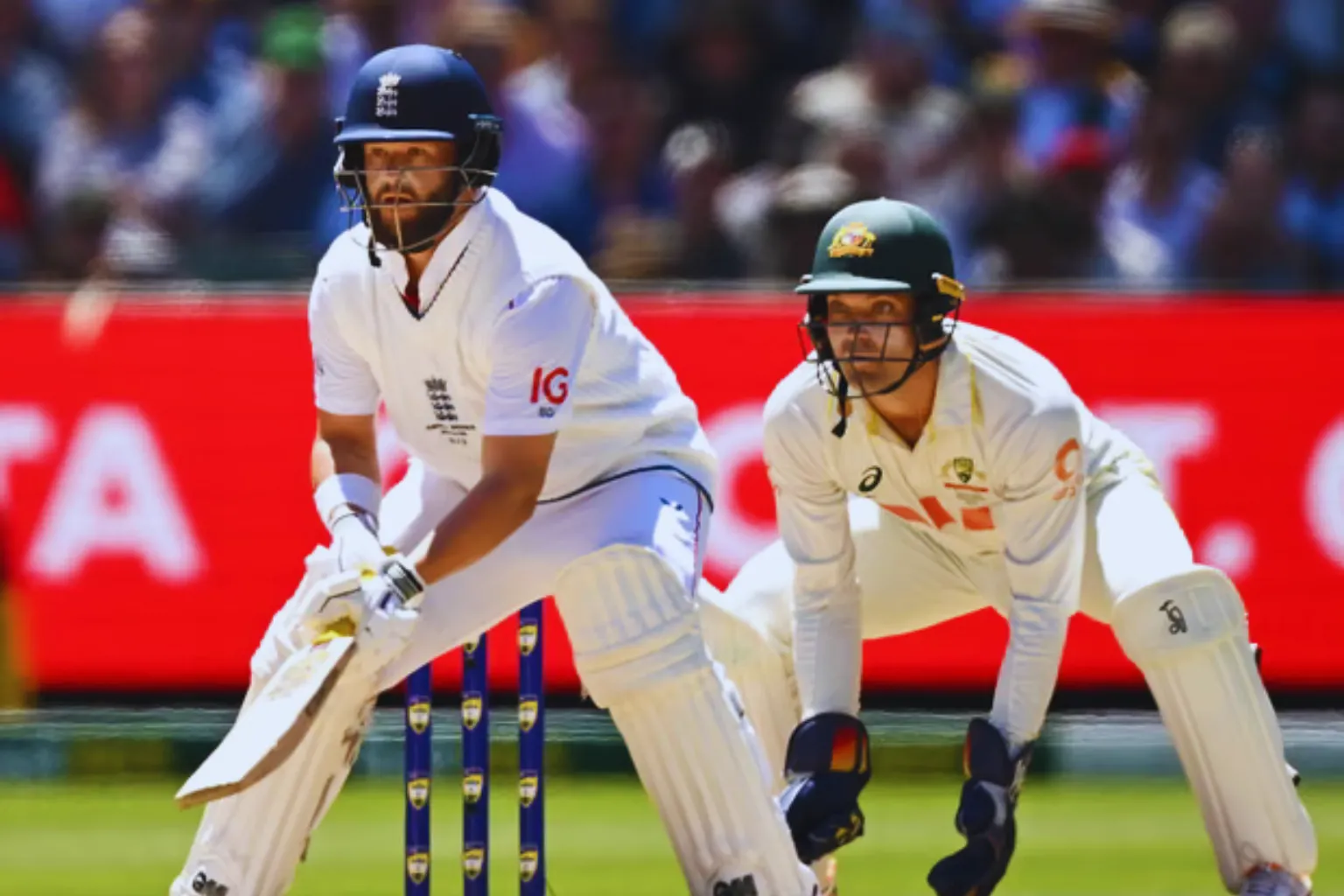
Melbourne Cricket Ground-In a result that few predicted and many had waited nearly a generation to witness, England’s men finally broke their long-standing Ashes curse on Australian soil, surviving chaos at the Melbourne Cricket Ground to claim a dramatic four-wicket victory in the fourth Test. The win, completed inside just two days, ended an agonising run of 18 consecutive Tests without success in Australia and ensured this Ashes series would not end in a humiliating whitewash.
For England, this was more than just a solitary victory on the scoreboard. It was a moment of relief, defiance, and quiet redemption in a tour that had been relentlessly criticised from the moment it began. For Australia, it was a sobering reminder of cricket’s unpredictability-and a result that raised serious questions about pitch preparation, strategy, and the sustainability of two-day Test matches.
This edition of Cricket news ashes will be remembered not for elegant batting or marathon spells, but for survival, nerve, and adaptability in conditions that turned batting into a lottery and compressed five days of drama into fewer than 48 hours.
A Win 15 Years in the Making
England last won a Test match in Australia in December 2010. Since then, Ashes tours had followed a depressingly familiar script: early hope, mounting pressure, and eventual collapse. As this tour unfolded, it appeared no different. Australia had already secured the Ashes with a 3-0 lead, and England arrived at Melbourne battered both mentally and tactically.
Yet cricket, as it so often does, found a way to surprise.
England’s victory at the MCG does not alter the broader narrative of the series-Australia still lead 3-1-but it restored pride and belief to a team that had been questioned at every turn. After nearly 15 years of frustration, England finally had a reason to celebrate on Australian soil.
A Pitch That Changed Everything
Much of the drama in this Test stemmed from the pitch itself. Prepared by curator Matt Page, the surface was lush, green, and alive with movement. Balls jagged sharply off the seam, bounced unevenly, and frequently did more than batters could reasonably anticipate.
Despite the outcry, the pitch was not deemed dangerous. Instead, it was brutally demanding. Batting required bravery, clarity, and a willingness to score quickly rather than dig in. Any hesitation proved fatal.
Both teams struggled, but England adapted more effectively, particularly during the decisive run chase.
England Set the Tone with the Ball
England’s bowlers laid the foundation for victory on the second morning. Australia resumed their second innings with a slim advantage, but confidence quickly drained as wickets fell in clusters.
Brydon Carse emerged as the standout performer, exploiting the conditions with relentless accuracy. His four wickets for 34 runs tore through Australia’s middle order, while Ben Stokes led from the front, claiming three wickets for 24 runs with characteristic intensity.
Josh Tongue, already impactful in the first innings, added two more wickets to finish with a match-defining performance that earned him the Player of the Match award.
Australia, rattled by the movement and pressure, collapsed to 132 all out by early afternoon. It was one of their shortest completed Tests by overs faced-a stark statistic that underscored just how unforgiving the conditions had become.
Australian Batting Unravels
The collapse was as surprising as it was swift. Australia began the day cautiously, but hesitation crept in as the ball continued to misbehave.
Marnus Labuschagne endured a particularly uncomfortable stay at the crease, struck painfully on the hands before edging to slip. Travis Head showed brief resistance with a fluent 46, but even he could not overcome a delivery from Carse that seamed sharply and clipped the top of the stumps.
Usman Khawaja fell for a duck, mistiming a pull shot to long leg, while wickets tumbled rapidly either side of lunch. In just two overs, Australia lost three crucial batters, handing England a realistic target.
Steve Smith remained unbeaten on 24 but found little support as Australia were bowled out after just 79.5 overs across both innings-their fastest combined dismissal since 1928.
A Chase Full of Danger and Determination
England required 175 runs to win-a target that may appear modest on paper, but under these conditions it was anything but straightforward. In fact, it was the highest total of the match, highlighting just how treacherous batting had become.
Zak Crawley and Ben Duckett understood the challenge immediately. Rather than retreat into their shells, they attacked.
Duckett swung hard, rode his luck, and played with fearless intent, while Crawley drove confidently and punished anything overpitched. Their opening stand of 51 runs in just seven overs stunned Australia and immediately shifted momentum.
As Australia captain Steve Smith later admitted, those early exchanges dulled the seam of the Kookaburra ball and made batting marginally easier — a crucial factor in the chase.
Bethell’s Composure Steals the Spotlight
While Crawley and Duckett set the tone, it was Jacob Bethell who anchored the innings with maturity beyond his years. Batting with calm assurance, Bethell top-scored with 40 from 46 balls, mixing sound defence with well-timed aggression.
His crisp on-drive off Scott Boland for four was one of the standout shots of the match, a rare moment of elegance on a surface that punished even the slightest mistake.
Even when edges flew into gaps and shots narrowly avoided fielders, Bethell maintained his composure-a quality England desperately needed amid the pressure.
England Take Calculated Risks
In keeping with their aggressive philosophy, England shuffled their batting order, promoting Brydon Carse to No. 3 as a pinch-hitter. The move did not pay dividends-Carse managed just six runs-but it illustrated England’s willingness to disrupt Australia’s plans.
Will Jacks was pushed down the order as insurance, while Joe Root and Ben Stokes prepared for a tense finish.
Australia fought back after tea, with Scott Boland trapping Crawley lbw and Bethell holing out to cover. When Root was pinned lbw for 15 and Stokes edged behind, the match teetered once again.
With 10 runs still required and four wickets remaining, nerves rippled through the ground.
Calm Heads Finish the Job
Rather than retreat to the dressing room, Stokes stood on the boundary, watching anxiously as Harry Brook and Jamie Smith navigated the final moments.
Brook, whose pads deflected four leg byes to seal victory at 5:24pm, played with restraint and confidence. Smith supported intelligently, while extras proved surprisingly valuable in edging England closer.
When the winning runs were confirmed, England’s players erupted in relief more than celebration. It had been a madcap, frenetic Test-but also a deeply satisfying one.
What the Win Means for England
This victory does not erase the disappointments of the tour, nor does it alter the reality that Australia have retained the Ashes. But it matters-profoundly.
For Ben Stokes and Joe Root, who shared a quiet embrace at the end, it represented the removal of a psychological barrier that had loomed over their careers. A Test win in Australia had long seemed elusive, even impossible. Now it is part of their legacy.
For younger players like Bethell and Duckett, it offered proof that England can compete-and win-in the harshest conditions cricket has to offer.
Questions for Australian Cricket
While England celebrated, Australia were left to reflect. The match raised uncomfortable questions about pitch preparation, Test scheduling, and the commercial implications of two-day matches.
This was the second two-day Test of the series-something not seen since 1896. For Cricket Australia, it represented lost revenue from ticket sales and broadcasting, particularly for fans who had purchased passes for the remaining days.
Although the pitch was deemed safe, its extreme nature is likely to prompt further scrutiny ahead of future Test summers.
Also read: Ashes 4th Test Day 2: England Secure Historic Melbourne Victory to End 15-Year Drought
A Circuit-Breaker in a Difficult Tour
In the wider context of this Ashes series, England’s victory serves as a circuit-breaker. It halted the narrative of failure, restored belief within the squad, and reminded supporters why Test cricket remains compelling even when compressed into a whirlwind.
This was not a flawless performance, nor a dominant one. But it was resilient, brave, and timely.
As the series moves forward, England may still leave Australia without the urn-but they leave Melbourne with something almost as valuable: proof that they can win here again.
Conclusion-Cricket News Ashes
This extraordinary MCG Test will be remembered as one of the strangest and most intense matches in modern Ashes history. A two-day contest, shaped by extreme conditions and fearless cricket, delivered drama, controversy, and ultimately redemption for England.
In the ongoing narrative of Cricket news ashes, England’s victory stands as a reminder that even in the darkest tours, persistence can still find a way through.
For fans, players, and historians alike, it was a moment worth waiting 15 years for.