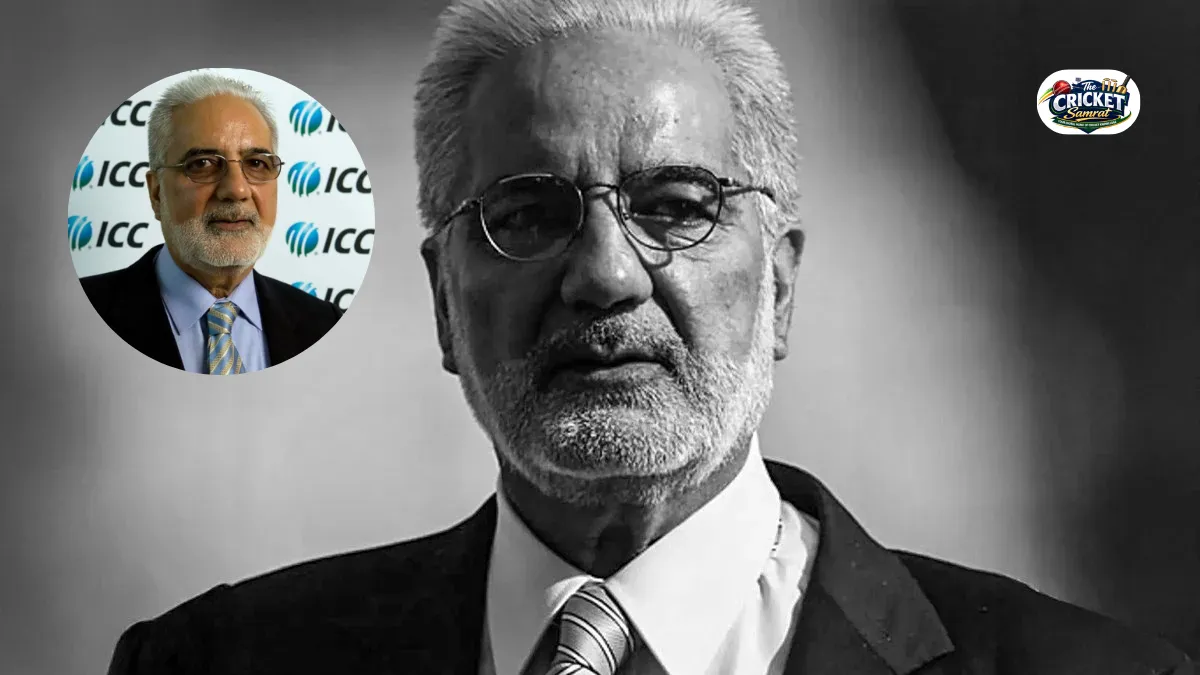
Indian cricket is mourning the loss of one of its most influential administrators as Inderjit Singh Bindra, former President of the Board of Control for Cricket in India (BCCI), passed away on Sunday evening in Delhi at the age of 84. A towering figure in cricket administration, Bindra played a transformative role in shaping modern Indian cricket, from infrastructure development to broadcasting reforms and global influence.
According to family sources, Inderjit Singh Bindra had been battling prolonged illness for some time. His health deteriorated sharply on Sunday afternoon, and he breathed his last at approximately 6:30 pm at his residence in the national capital. His cremation will be held on Monday afternoon at the Lodhi Crematorium, where family members, close associates, and members of the cricketing fraternity are expected to gather to pay their final respects.
Bindra’s death marks the end of an era for Indian cricket administration. Widely respected for his vision, courage, and administrative acumen, he leaves behind a legacy that continues to influence how cricket is governed, broadcast, and celebrated in India today.
A Distinguished Tenure as BCCI President (1993–1996)
Inderjit Singh Bindra served as President of the BCCI from 1993 to 1996, a period considered pivotal in Indian cricket’s evolution. His leadership came at a time when the sport was undergoing significant global changes, particularly in commercialization, television rights, and international governance.
During his tenure, Bindra was known for his firm stance on autonomy and reform. He worked to strengthen the BCCI’s institutional framework, improve its international standing, and protect Indian cricket’s interests on the global stage. His presidency laid the groundwork for many of the commercial and administrative advances that later helped make the BCCI the most powerful cricket board in the world.
Bindra’s approach was marked by clarity of purpose and a willingness to challenge established systems when they no longer served Indian cricket’s best interests. This fearless attitude earned him both admirers and critics, but even his detractors acknowledged his deep commitment to the game.
Decades of Service to Punjab Cricket
While Inderjit Singh Bindra made a national and international impact through the BCCI, his roots remained firmly connected to Punjab cricket. He served as the President of the Punjab Cricket Association (PCA) for an extraordinary 36 years, from 1978 to 2014, making him one of the longest-serving cricket administrators in India.
Under his leadership, Punjab cricket witnessed unprecedented growth. Bindra focused heavily on grassroots development, talent identification, and infrastructure improvement. His most enduring contribution at the state level was the development of the PCA Stadium in Mohali, which went on to become one of India’s premier international cricket venues.
In recognition of his immense contribution, the stadium was officially named the IS Bindra PCA Stadium, a rare honor that reflects the deep respect he commanded within the cricketing community. The venue has hosted numerous iconic matches, including World Cup encounters, IPL fixtures, and historic international games, standing as a lasting symbol of Bindra’s vision.
The Architect Behind India’s 1987 World Cup Hosting Rights
One of the most defining chapters of Inderjit Singh Bindra’s career was his instrumental role in securing hosting rights for the 1987 ICC Cricket World Cup, jointly organized by India and Pakistan. This tournament marked a historic shift in world cricket, as it was the first World Cup held outside England.
At a time when cricket’s administrative power was largely concentrated in England and Australia, Bindra emerged as a strong advocate for South Asia’s growing influence in the sport. His diplomatic skills, strategic thinking, and persistence played a crucial role in convincing the international cricketing establishment that the subcontinent was capable of hosting a global tournament of such scale.
The success of the 1987 World Cup proved to be a turning point. It not only showcased India’s organizational capabilities but also accelerated cricket’s popularity across Asia. Many experts believe this tournament laid the foundation for the region’s eventual dominance in world cricket economics and viewership.
Breaking Doordarshan’s Monopoly: A Broadcasting Revolution
Perhaps one of Inderjit Singh Bindra’s most far-reaching contributions came in 1994, when he filed a landmark petition in the Supreme Court of India challenging Doordarshan’s monopoly over cricket broadcasting.
At the time, cricket telecasts in India were controlled exclusively by the state broadcaster, limiting revenue potential and global exposure. Bindra recognized that for Indian cricket to grow financially and professionally, it needed access to global broadcasters and competitive television markets.
The Supreme Court’s favourable ruling proved revolutionary. It opened the doors for private and international broadcasters, fundamentally changing the economics of Indian sport. This decision transformed India into the world’s largest television market for cricket, dramatically increasing revenue streams for the BCCI and setting the stage for future innovations such as franchise leagues and digital streaming.
Industry experts often credit this move as one of the most important milestones in Indian cricket’s commercial history, and it stands as a testament to Bindra’s foresight and willingness to challenge entrenched systems.
A Leader Who Redefined Indian Cricket’s Global Standing
Throughout his career, Inderjit Singh Bindra was deeply involved in international cricket politics and administration. He consistently advocated for greater representation and respect for Asian cricket boards within global governing bodies.
His efforts helped elevate India’s status within the International Cricket Council (ICC) and ensured that the voices of emerging cricketing nations were heard. Bindra believed that cricket’s future lay in expanding its reach beyond traditional power centers, a philosophy that aligns closely with the sport’s current global direction.
Colleagues often described him as principled, intellectually sharp, and unwavering in his beliefs. He was not afraid to take unpopular decisions if he felt they were in the long-term interest of the game.
Tributes Pour In from the Cricketing World
Following the news of Inderjit Singh Bindra’s passing, tributes poured in from across the cricketing fraternity.
The BCCI issued an official statement expressing deep sorrow at the loss of its former president. The board said it mourns the demise of a leader who played a pivotal role in shaping Indian cricket and extended heartfelt condolences to his family and loved ones.
ICC President and former BCCI Secretary Jay Shah also paid tribute, describing Bindra as a key figure in Indian cricket administration. He expressed sadness over the loss and said Bindra’s legacy would continue to inspire future generations of administrators and cricket lovers.
Several former players, administrators, and sports analysts took to social media to remember Bindra’s contributions, highlighting his role in infrastructure development, broadcasting reform, and India’s rise as a cricketing powerhouse.
Also read: ICC Warns Pakistan Over Bangladesh Support, Asia Cup Exclusion and Sanctions Loom
A Legacy That Will Endure Beyond His Lifetime
The impact of Inderjit Singh Bindra on Indian cricket cannot be measured by titles or positions alone. His true legacy lies in the systems he helped build, the reforms he initiated, and the confidence he instilled in Indian cricket administrators to think big and act boldly.
From world-class stadiums to global broadcasting deals, from World Cup hosting rights to institutional independence, Bindra’s influence is woven into the very fabric of Indian cricket’s modern success story.
As Indian cricket continues to evolve in the digital age, many of the freedoms and opportunities it enjoys today can be traced back to decisions made during Bindra’s tenure. His work ensured that cricket in India was not just a sport, but a professionally managed, globally influential industry.
Also read: T20 World Cup 2026: Bangladesh Officially Ruled Out as Scotland Earns Surprise Entry
Final Farewell to a Visionary Administrator
As family members prepare to perform the last rites of Inderjit Singh Bindra at the Lodhi Crematorium, the cricketing world pauses to remember a man who dedicated his life to the growth and integrity of the game.
His passing leaves a void that will be difficult to fill, but his contributions ensure that his name will forever remain etched in the history of Indian and world cricket.
Indian cricket has lost one of its strongest pillars, but the legacy of Inderjit Singh Bindra will continue to guide the sport for generations to come.