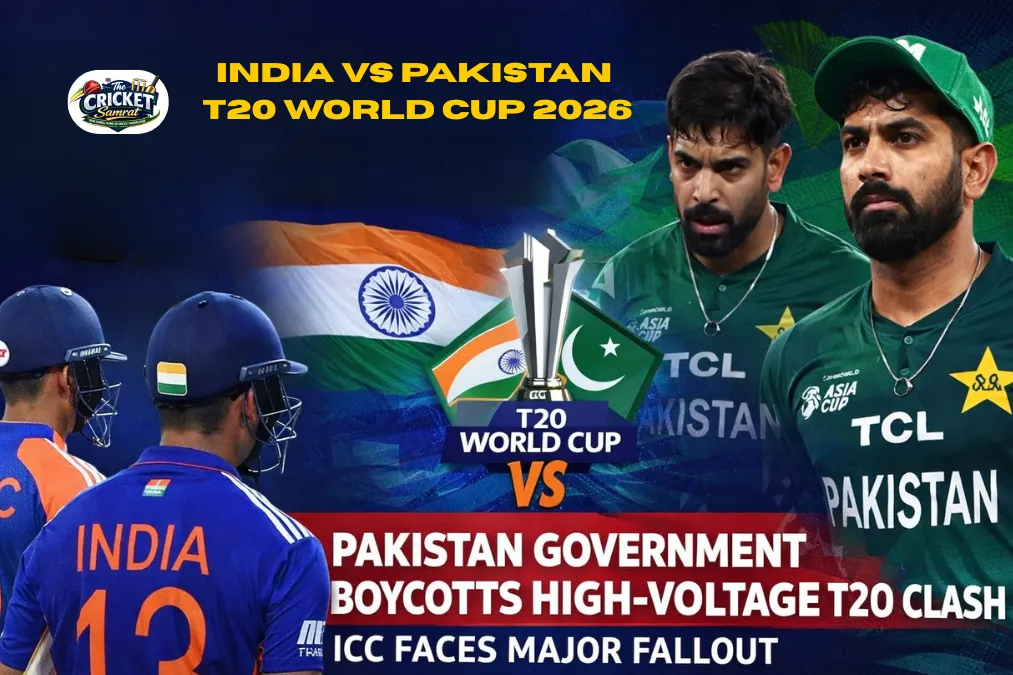
The much-anticipated India vs Pakistan T20 World Cup 2026 clash in the ICC Men’s T20 World Cup will not take place, following a dramatic announcement by the Pakistan government. In a decision that has sent shockwaves through the global cricketing community, Pakistan has officially declared that its national team will boycott the group-stage match against India scheduled for 15 February 2026 in Colombo.
While Pakistan will still participate in the ICC Men’s T20 World Cup 2026, the refusal to take the field against India has raised serious questions about tournament integrity, commercial impact, and the future of India-Pakistan cricket at global events.
Pakistan Confirms Participation—but Not Against India
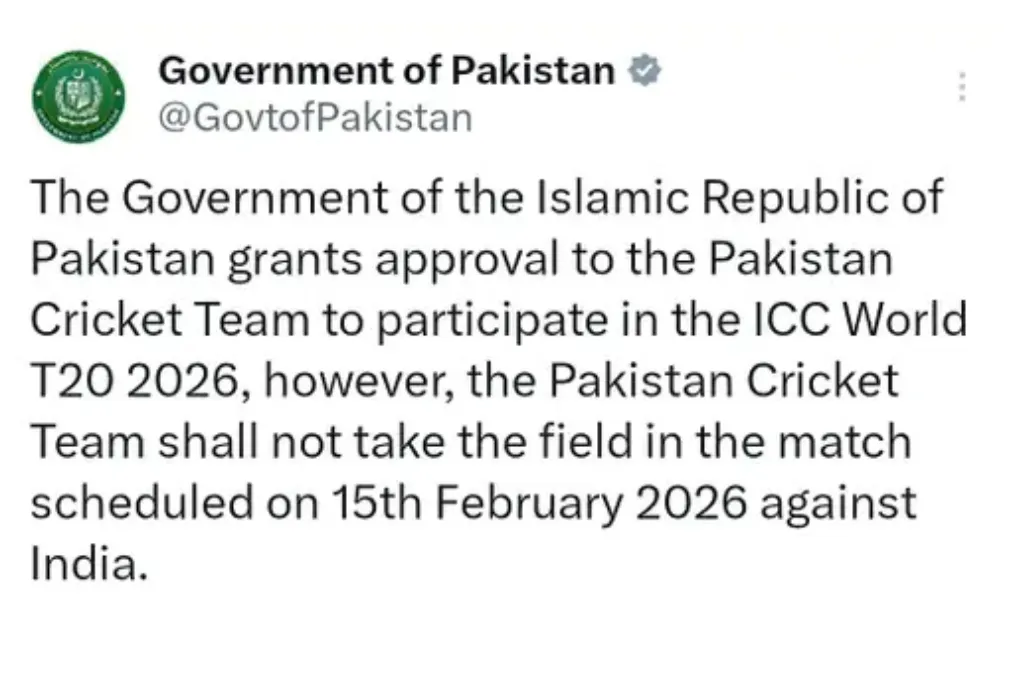
In a statement released on Sunday, the Government of Pakistan confirmed that it has granted clearance for the national team to compete in the T20 World Cup 2026. However, it categorically stated that Pakistan will not play the group-stage match against India.
The announcement clarified that the boycott is limited to the India fixture and does not apply to the rest of the tournament. What remains unclear is whether Pakistan would refuse to play India again if the two teams meet in the Super-8 stage or knockout rounds.
This uncertainty has added further tension to an already volatile situation surrounding the India vs Pakistan World Cup 2026 encounter.
Official Government Statement on X (Formerly Twitter)
The Pakistani government issued its decision through an official post on X, stating:
“The Government of the Islamic Republic of Pakistan permits the Pakistan cricket team to participate in the ICC Men’s World T20 2026. However, the Pakistan cricket team will not take the field against India in the match scheduled for 15 February 2026.”
The post made no reference to future knockout matches, leaving room for speculation and diplomatic maneuvering in the weeks ahead.
Why Pakistan Is Boycotting the India Match
The root of the controversy lies in the ICC’s decision to remove Bangladesh from the tournament and replace them with Scotland.
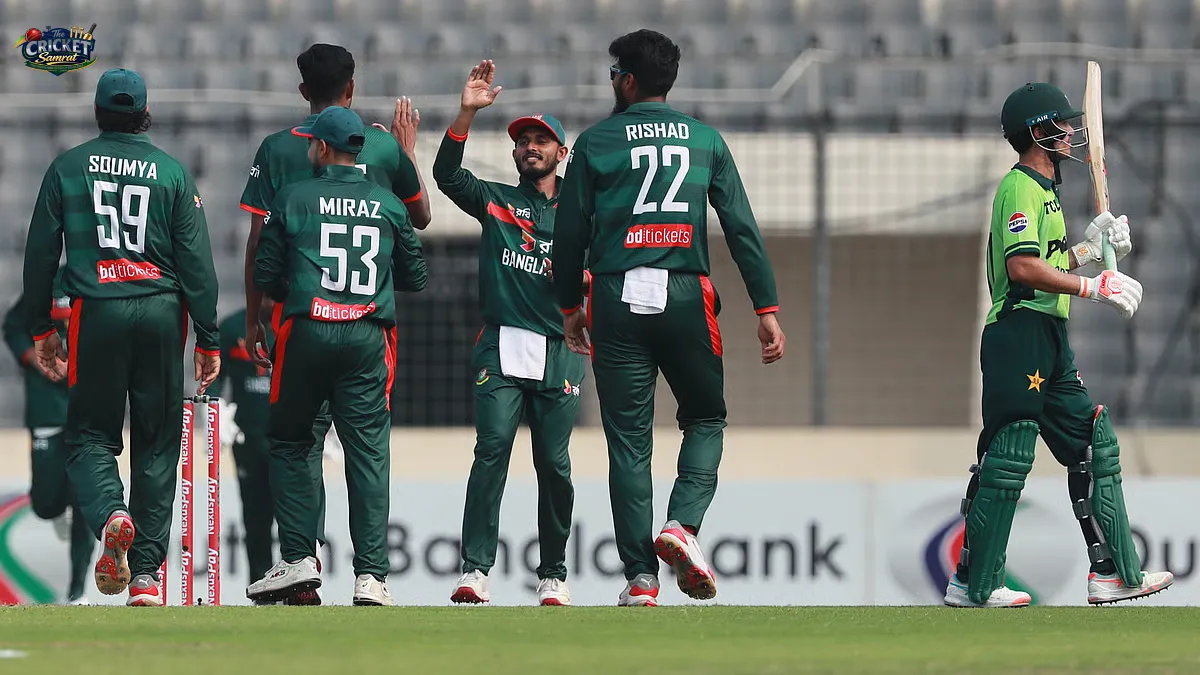
Bangladesh had expressed security concerns about playing matches in India, requesting either a venue change or additional assurances. The ICC rejected those concerns and eventually removed Bangladesh from the tournament altogether.
This decision angered the Pakistan Cricket Board (PCB) and the Pakistani government, which viewed the move as unfair and politically motivated. In protest, Pakistan announced it would boycott the India match in solidarity with Bangladesh.
PCB Chief Met Prime Minister Before Final Decision
Before the official announcement, PCB Chairman Mohsin Naqvi met Pakistan Prime Minister Shehbaz Sharif on 26 January 2026. The meeting focused on:
- Pakistan’s participation in the T20 World Cup
- The India vs Pakistan World Cup 2026 fixture
- Possible consequences of a boycott
Naqvi later told reporters that a final decision would be taken by Friday or Monday. The government’s announcement on Sunday confirmed that the decision had been finalized.
Pakistan’s Group-Stage Matches After the Boycott
With the India fixture abandoned, both India and Pakistan will now play only three group-stage matches instead of four.
Pakistan Group-Stage Schedule (Revised)
| Date | Match | Venue |
|---|---|---|
| 7 February 2026 | Pakistan vs Netherlands | TBC |
| 10 February 2026 | Pakistan vs USA | TBC |
| 18 February 2026 | Pakistan vs Namibia | TBC |
India Group-Stage Schedule (Revised)
| Date | Match | Venue |
|---|---|---|
| 7 February 2026 | India vs USA | TBC |
| 12 February 2026 | India vs Namibia | TBC |
| 18 February 2026 | India vs Netherlands | TBC |
The India vs Pakistan World Cup 2026 match on 15 February will be recorded as a walkover, with India expected to receive two automatic points.
What This Means for Group A Standings
Both India and Pakistan are placed in Group A, which consists of five teams:
- India
- Pakistan
- Namibia
- Netherlands
- USA
From each group, two teams qualify for the Super-8 stage.
Pakistan’s decision to boycott the India match significantly alters the group dynamics. India now has a major advantage, as the two points from the abandoned match make qualification far easier.
However, Pakistan can still qualify for the Super-8 stage by winning its remaining three matches convincingly.
India vs Pakistan World Cup Record: A One-Sided Rivalry
Historically, Pakistan has struggled heavily against India in ICC World Cup tournaments, especially in pressure games.
India vs Pakistan – World Cup Head-to-Head Record
| Tournament | Matches Played | India Wins | Pakistan Wins |
|---|---|---|---|
| T20 World Cups | 8 | 7 | 1 |
| ODI World Cups | 8 | 8 | 0 |
Pakistan has defeated India only once in T20 World Cup history and has never beaten India in an ODI World Cup.
This lopsided record further intensifies debates around the India vs Pakistan T20 World Cup 2026 boycott, with critics suggesting Pakistan is avoiding a high-pressure contest.
Impact on India’s Campaign
From a purely sporting perspective, India stands to benefit the most from the boycott.
- India receives 2 free points
- Reduced risk of an upset
- Easier path to the Super-8 stage
- Lower physical and mental workload on players
However, Indian fans and former players have expressed disappointment, stating that cricket’s biggest rivalry deserves to be decided on the field, not through political decisions.
Financial Impact: ICC and Broadcasters at Risk
The India vs Pakistan World Cup 2026 match was expected to be the most-watched game of the tournament—often attracting higher viewership than even the final.
Estimated Financial Impact
| Stakeholder | Impact |
|---|---|
| Broadcasters | Heavy losses from sold ad slots |
| Advertisers | Reduced global exposure |
| ICC | Indirect risk of compensation claims |
| Sponsors | Lower engagement metrics |
Broadcasters had reportedly sold all advertising slots months in advance, anticipating record-breaking global viewership.
While the ICC itself does not face direct losses—having already sold media rights—it could face legal or compensation claims from broadcasters.
Industry estimates suggest that a single India-Pakistan match accounts for 8–10% of the total revenue generated by a T20 World Cup.
Why PCB Chairman Threatened to Withdraw Completely
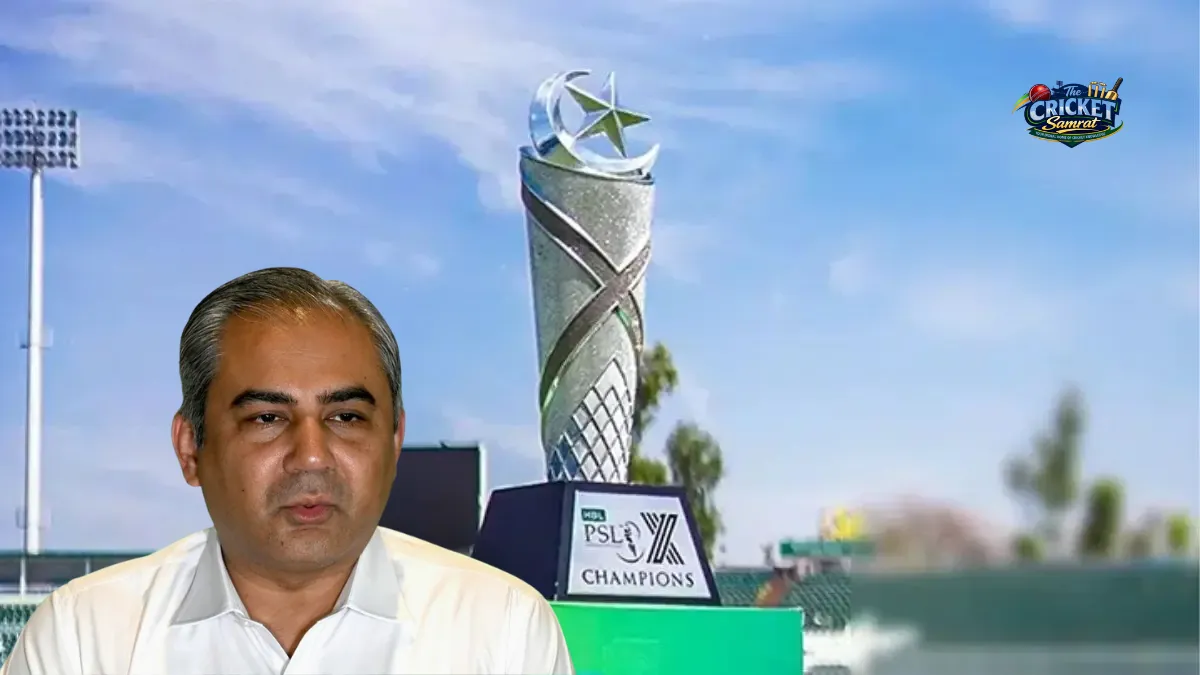
After Bangladesh was removed from the tournament, PCB Chairman Mohsin Naqvi openly threatened that Pakistan might withdraw entirely from the World Cup.
In an interview with Pakistani newspaper Dawn, Naqvi stated:
“The ICC has treated Bangladesh unfairly. We are waiting for our government’s decision. If permission is not granted, Pakistan will not play in the tournament either.”
Following this statement, the ICC reportedly warned PCB that severe action would be taken if Pakistan pulled out of the tournament entirely.
The final compromise allowed Pakistan to participate—but without playing India.
Why Bangladesh Refused to Play in India
The Bangladesh cricket board cited player security concerns as the primary reason for refusing to play matches in India.
Tensions escalated after the BCCI denied IPL participation to Mustafizur Rahman, following unrest and violence against minorities in Bangladesh.
As a response:
- Mustafizur Rahman was released by KKR on BCCI’s advice
- Bangladesh banned IPL broadcasts domestically
- Bangladesh requested venue changes for the T20 World Cup
When the ICC rejected these demands, Bangladesh was removed from the tournament.
Pakistan’s Squad for the T20 World Cup 2026
Despite the controversy, Pakistan has announced a strong squad for the tournament.
Pakistan T20 World Cup 2026 Squad
| Player |
|---|
| Salman Ali Agha (Captain) |
| Abrar Ahmed |
| Babar Azam |
| Faheem Ashraf |
| Fakhar Zaman |
| Khwaja Mohammad Nafay (Wicketkeeper) |
| Mohammad Nawaz |
| Mohammad Salman Mirza |
| Naseem Shah |
| Sahibzada Farhan |
| Saim Ayub |
| Shaheen Shah Afridi |
| Shadab Khan |
| Usman Khan (Wicketkeeper) |
| Usman Tariq |
Also read: Ishan Kishan Century: Explosive 42-Ball Hundred Against New Zealand Shatters Multiple Records
What Happens Next?
The ICC is expected to hold emergency meetings to assess:
- Tournament fairness
- Broadcast obligations
- Future India-Pakistan fixtures
- Possible rule clarifications for walkovers
Cricket boards worldwide are watching closely, as the India vs Pakistan World Cup 2026 controversy may set a precedent for how political disputes influence international tournaments.
Conclusion: Cricket Loses, Politics Wins?
The absence of the India vs Pakistan T20 World Cup 2026 clash is a massive blow to fans, broadcasters, and the sport itself. While India gains a competitive advantage and Pakistan makes a political statement, global cricket loses one of its most iconic spectacles.
As the tournament approaches, all eyes will remain on whether this boycott extends beyond the group stage—or if cricket diplomacy can still deliver the rivalry the world was waiting for.