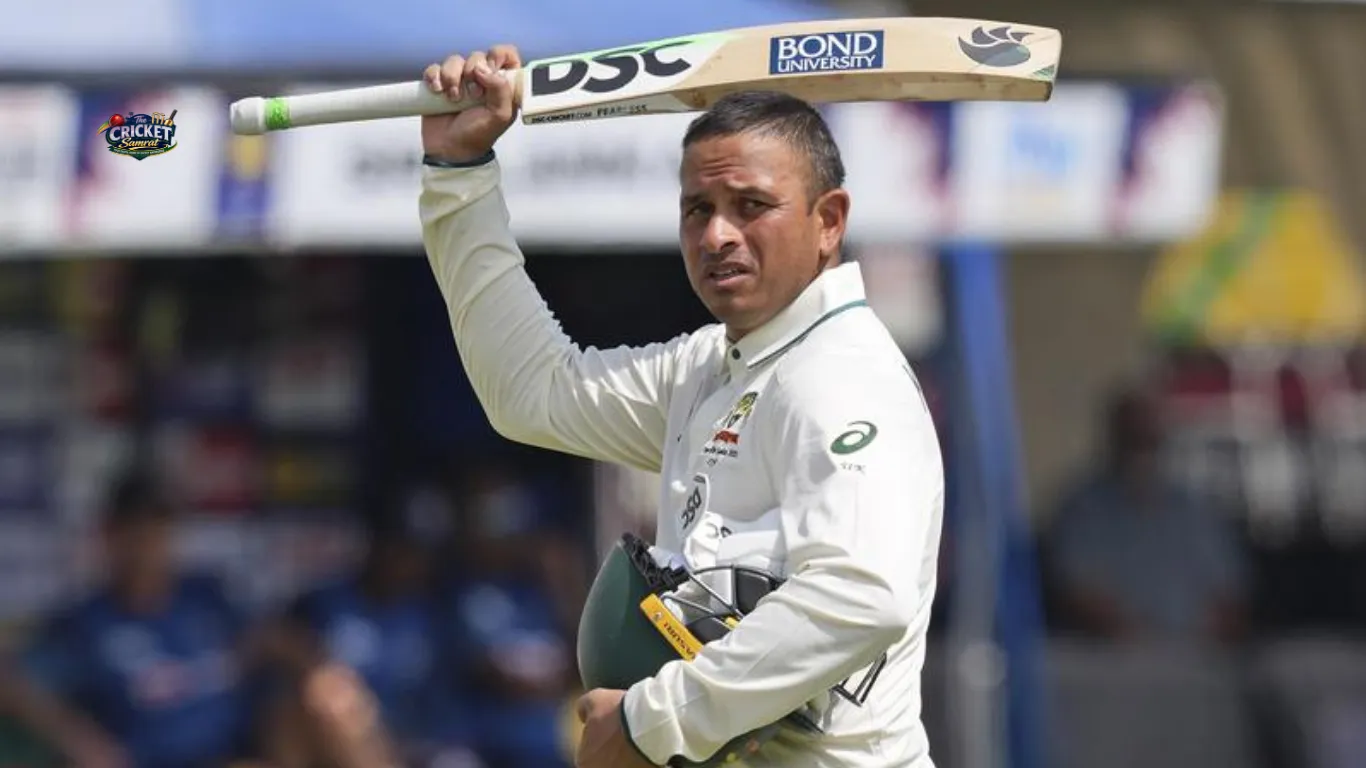
The story of Usman Khawaja’s Cricket retirement is not just the end of a distinguished international career; it is the closing chapter of one of the most significant journeys in modern Australian sport. A journey that began in Pakistan, matured on the streets and school grounds of Sydney, and ultimately reached the highest levels of Test cricket. On January 2, 2026, the veteran Australian batter confirmed that the upcoming fifth and final Ashes Test at the Sydney Cricket Ground would be his last appearance in international cricket, bringing down the curtain on a career defined by resilience, excellence, and social impact.
For Khawaja, retirement at the SCG-the very venue where he made his Test debut more than 15 years earlier-feels poetic. His departure after the 88th Test match of his career is symbolic, emotional, and deeply meaningful not just for him, but for Australian cricket and the thousands of young players who saw themselves reflected in his journey.
A Farewell Written in Sydney
Usman Khawaja will walk out one final time in Baggy Green whites on January 4, 2026, at the Sydney Cricket Ground, the scene of his international debut during the 2010–11 Ashes series. Few players are granted such symmetry in their careers-beginning and ending at the same iconic venue, in the same historic rivalry.
At 39 years of age, Khawaja believes the time is right. Speaking at a press conference announcing his Cricket retirement, he reflected on his career with honesty and pride, emphasizing that his decision was not born of regret but of fulfillment.
“I’ve given everything I had to Australian cricket,” he said. “Now it’s time to step aside and let the next generation take over.”
From Islamabad to International Stardom
Born in Islamabad, Pakistan, Usman Khawaja moved to Australia with his family at the age of five. Growing up in western Sydney, cricket was both a passion and a challenge. While Australia has long celebrated multiculturalism, elite sport-particularly cricket-was not always an easy space for children who looked or sounded different.
Khawaja’s rise through the ranks was slow and often frustrating. Despite being one of the most technically gifted batters in domestic cricket, he frequently found himself overlooked at national selection tables. Yet his persistence paid off.
When he finally earned his Test cap in January 2011, Khawaja became the first Muslim and first Pakistan-born cricketer to represent Australia in Test cricket, and only the seventh foreign-born player to do so in the previous 80 years. His selection marked a cultural milestone that extended far beyond the boundary rope.
A Test Career Defined by Skill and Substance
Across 88 Test matches, Usman Khawaja amassed 6,206 runs at an average of 43.39, including 16 centuries. These numbers alone place him among Australia’s most reliable batters of the modern era. Yet statistics only tell part of the story.
Khawaja was admired for his calm temperament, elegant stroke play, and exceptional ability to bat time-especially under pressure. Whether anchoring an innings after early wickets or constructing long partnerships, he brought balance and stability to the Australian lineup.
For much of his career, Khawaja occupied the top or upper-middle order, adapting to different roles depending on team needs. His ability to reinvent himself — particularly later in his career-became one of his defining traits.
Career Setbacks and the Power of Reinvention
No great career unfolds without setbacks, and Khawaja’s was no exception. One of the most challenging phases came during the 2021–22 Ashes series when he lost his place in the side to Marnus Labuschagne. Many believed his Test career was nearing its end.
Then came an unexpected lifeline.
When Travis Head tested positive for COVID-19 ahead of the Sydney Test, Khawaja was called into the squad at the last minute. What followed was one of the most remarkable comebacks in Ashes history. Batting with supreme control and confidence, he scored centuries in both innings, silencing critics and reigniting his international career.
From that moment, Khawaja transitioned into an opening role, forging a highly successful partnership with David Warner. The duo became one of Australia’s most dependable opening combinations until Warner’s own Test retirement two years ago-also at the SCG.
The Final Ashes Series and a Tough Goodbye
The 2025–26 Ashes series was another test of Khawaja’s resilience. He suffered a back injury in the opening Test in Perth, forcing him to miss the second match and initially lose his place for the third Test in Adelaide. Once again, critics questioned his commitment and fitness.
Media scrutiny intensified, with commentary that Khawaja later described as deeply personal and unfair. He spoke openly about the criticism, noting that similar situations involving other players were often handled differently.
“I was attacked for days,” Khawaja said. “Questions were raised about my commitment, about who I was as a teammate. It showed me that even now, I’m still treated differently.”
Despite the noise, Khawaja returned when Steve Smith was sidelined with vertigo. Batting at number four rather than opening, he scored crucial knocks of 82 and 40, playing a key role in Australia’s series-clinching victory.
More Than Runs: A Voice for Inclusion
While his on-field achievements are substantial, Khawaja’s legacy extends far beyond cricket statistics. Throughout his career, he has been a standard-bearer for diversity and inclusion in Australian sport.
In his retirement announcement, Khawaja spoke passionately about wanting the journey for future players like him to be easier.
“I just want the next Usman Khawaja to be treated the same,” he said. “No stereotypes. No assumptions. Just cricket.”
He acknowledged the challenges he faced growing up-being told, directly or indirectly, that he didn’t belong. Yet he emphasized the importance of representation.
“Seeing is believing,” he said. “If I can stand here today, then any kid who feels different can believe they belong too.”
Faith, Identity, and Pride
Khawaja has never shied away from speaking about his faith or identity. As a proud Muslim and a person of color, he often found himself navigating complex conversations about nationality, loyalty, and belonging-especially during times of heightened global tension.
One of his most powerful statements during his retirement announcement resonated widely.
“I’m a proud Muslim, colored boy from Pakistan who was told I would never play for Australia,” he said. “Look at me now. You can do the same.”
These words captured the essence of his journey-not defiance, but belief. Not anger, but hope.
Family at the Heart of the Journey
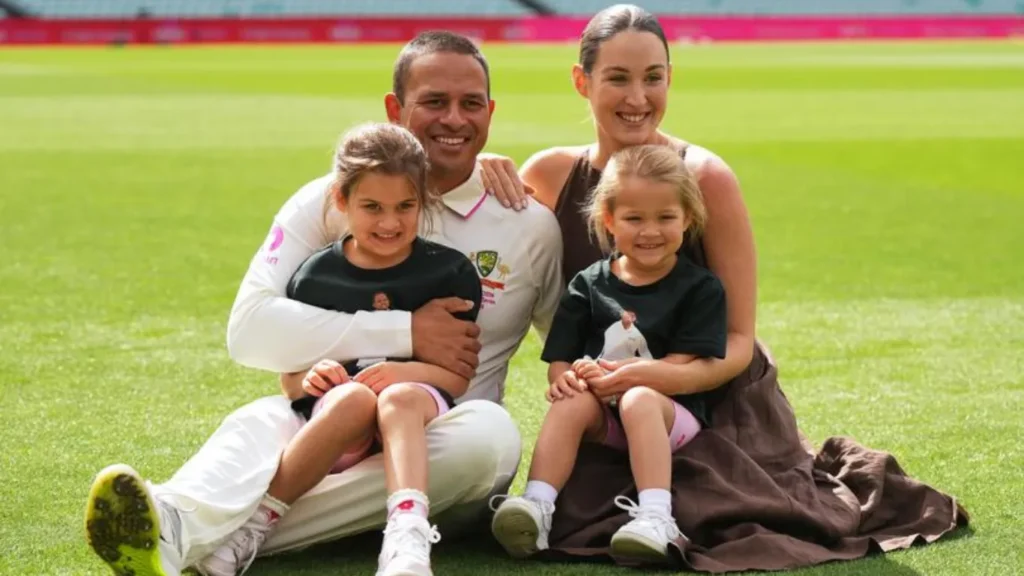
Standing alongside Khawaja during the announcement were his wife Rachel and daughters Aisha and Ayla. Throughout his career, family has been a constant source of strength and grounding.
Khawaja frequently credited his family for helping him navigate the pressures of international cricket, particularly during periods of criticism or injury. As he steps away from the game, spending more time with them is one of the aspects of retirement he looks forward to most.
Also read: Indian Women Team Wins 4th T20I by 30 Runs, Takes Unassailable 4-0 Lead Against Sri Lanka
What Cricket Retirement Means for Australia
Usman Khawaja’s Cricket retirement leaves a significant void in the Australian Test side-not just in terms of experience, but leadership. He was widely respected in the dressing room for his calm demeanor, thoughtful insights, and willingness to mentor younger players.
Selectors will now face the challenge of finding a replacement who can match his reliability at the top of the order. More importantly, they will need to ensure that the pathways Khawaja helped open remain accessible and inclusive.
A Career That Changed the Game
As Australian cricket reflects on Khawaja’s career, it becomes clear that his impact cannot be measured solely by runs or averages. He changed perceptions. He challenged stereotypes. He proved that Australian cricket could look like modern Australia.
His presence made the sport more relatable to countless young players from migrant and minority backgrounds, not just in Australia but around the world.
The Final Walk
When Usman Khawaja walks onto the SCG for the final time, the applause will be about more than cricket. It will be a recognition of perseverance, dignity, and progress.
Cricket retirement often marks the end of a chapter, but in Khawaja’s case, it also marks a beginning-the beginning of a legacy that will influence Australian cricket for generations to come.
From a young boy told he didn’t belong, to a Test stalwart who rewrote what belonging looks like, Usman Khawaja leaves the game richer than he found it.
And as the sun sets on his international career, one thing is certain: Australian cricket will never forget him.